

Transform your LLM requests into curated datasets for model fine-tuning, evaluation, and analysis. Helicone Datasets let you select, organize, and export your best examples with just a few clicks.
Why Use Datasets#
Create training datasets from your best requests for custom model fine-tuning
Build evaluation sets to test model performance and compare different versions
Curate high-quality examples to improve prompt engineering and model outputs
Export structured data for external analysis and research
Creating Datasets#
From the Requests Page#
The easiest way to create datasets is by selecting requests from your logs:
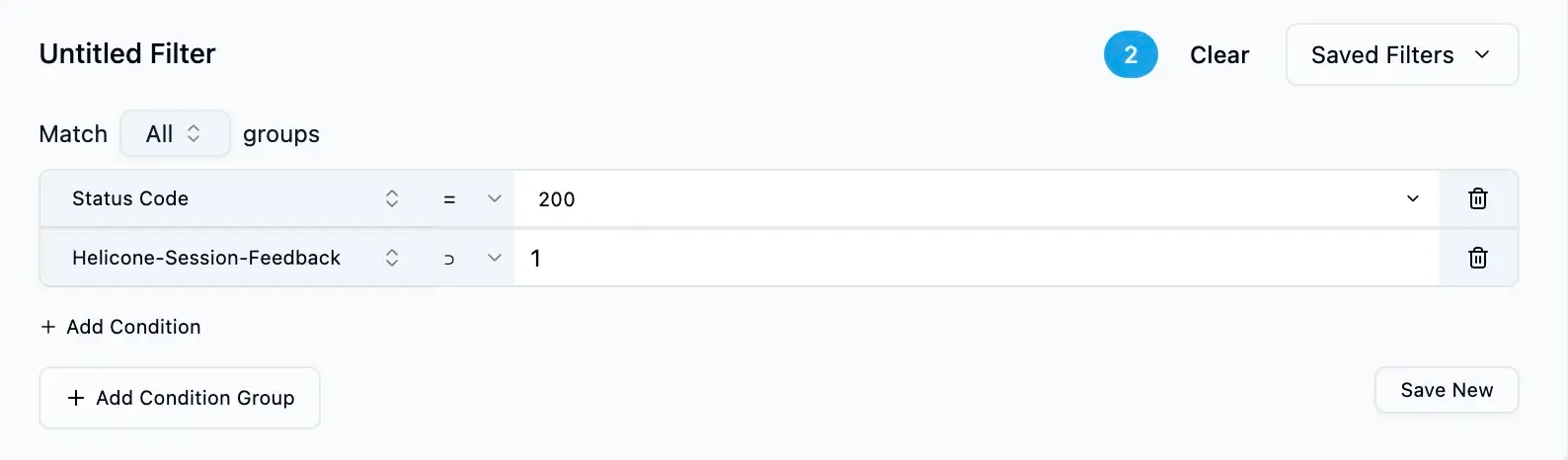
Filter your requests
Use custom properties and filters to find the requests you want
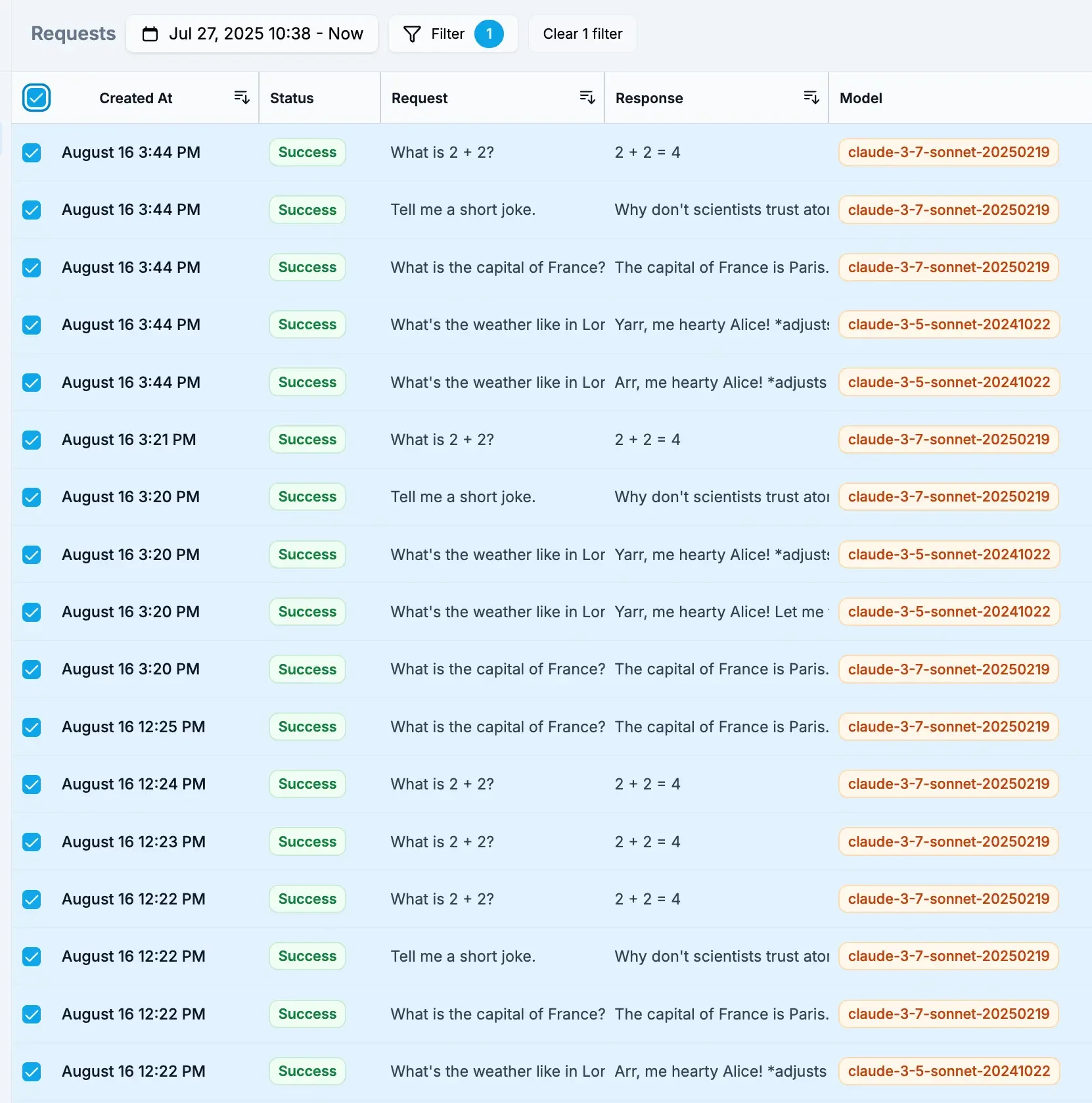
Select requests
Check the boxes next to requests you want to include in your dataset
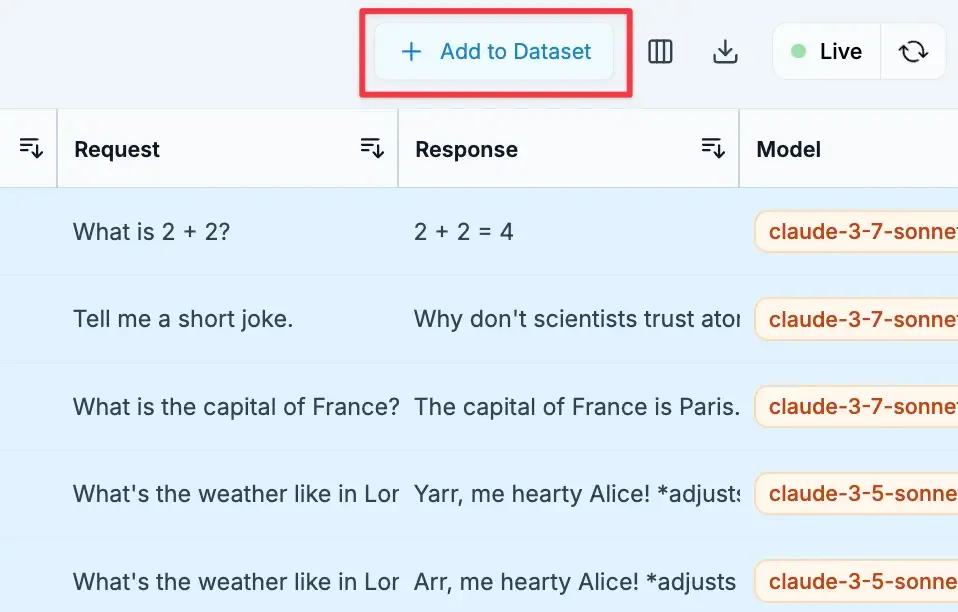
Add to dataset
Click "Add to Dataset" and choose to create a new dataset or add to an existing one
Via API#
Create datasets programmatically for automated workflows:
Building Quality Datasets#
The Curation Process#
Transform raw requests into high-quality training data through careful curation:
Collect broadly, then filter
Start by adding many potential examples, then narrow down to the best ones. It's easier to remove than to find examples later.
Review each example
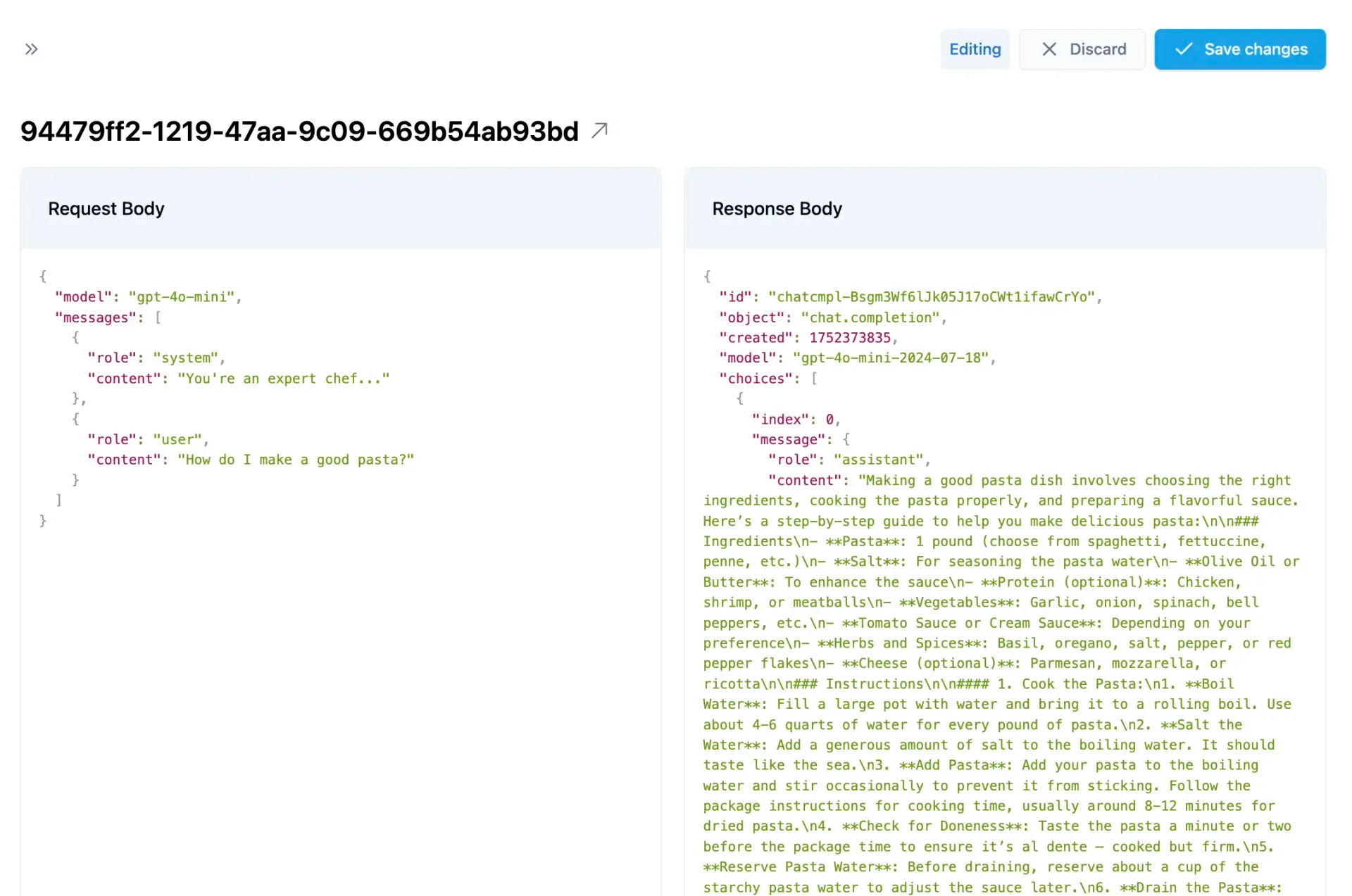
Examine each request/response pair for:
- Accuracy - Is the response correct and helpful?
- Consistency - Does it match the style and format you want?
- Completeness - Does it fully address the user's request?
Remove poor examples
Delete any examples that are:
- Incorrect or misleading responses
- Off-topic or irrelevant
- Inconsistent with your desired behavior
- Edge cases that might confuse the model
Balance your dataset
Ensure you have:
- Examples covering all common use cases
- Both simple and complex queries
- Appropriate distribution matching real usage
Quality beats quantity - 50-100 carefully curated examples often outperform thousands of uncurated ones. Focus on consistency and correctness over volume.
Dataset Dashboard#
Access all your datasets at helicone.ai/datasets:
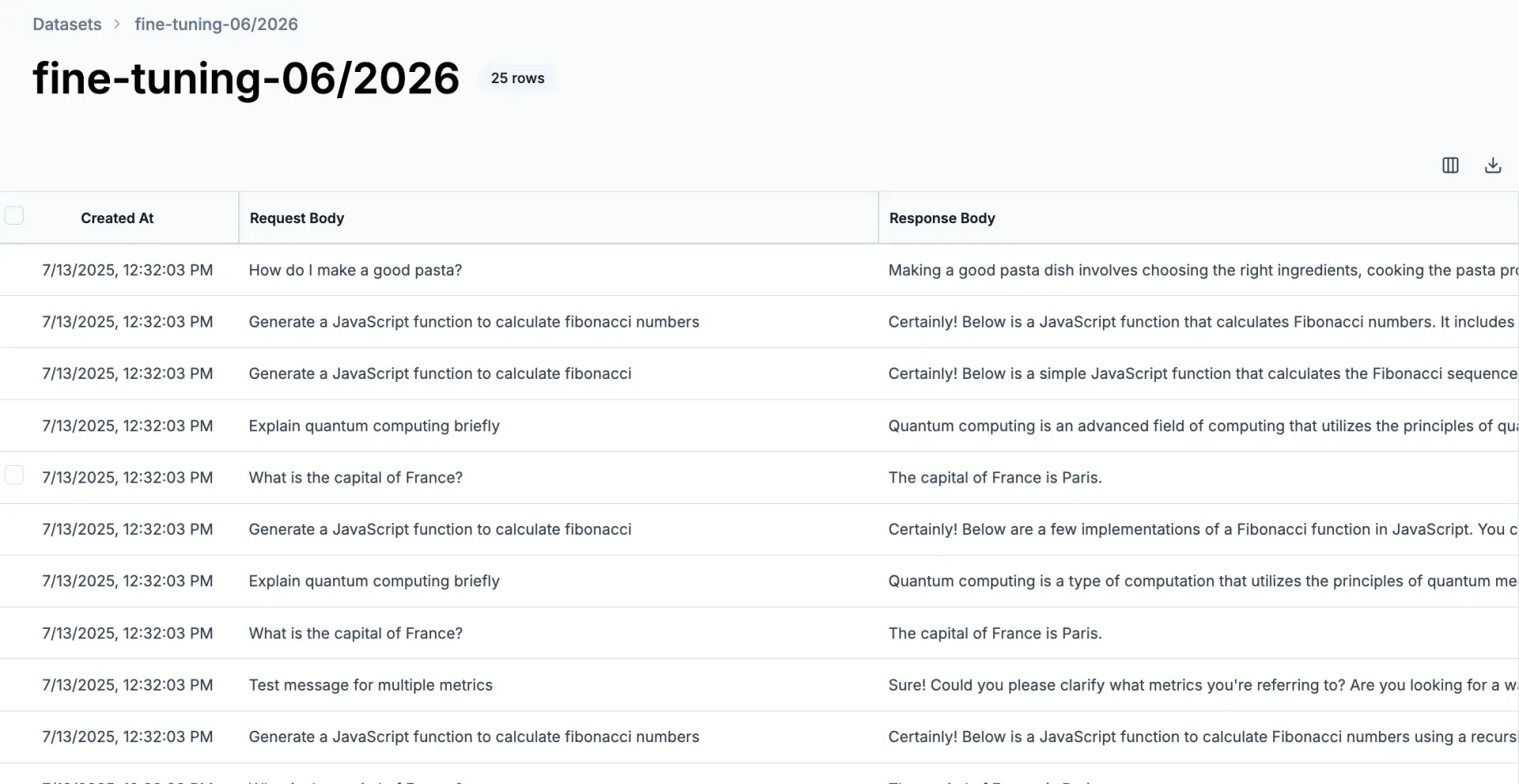
From the dashboard you can:
- Track progress - Monitor dataset size and last updated time
- Access datasets - Click to view and curate contents
- Export data - Download datasets when ready for fine-tuning
- Maintain quality - Regularly review and improve your collections
Exporting Data#
Export Formats#
Download your datasets in various formats:
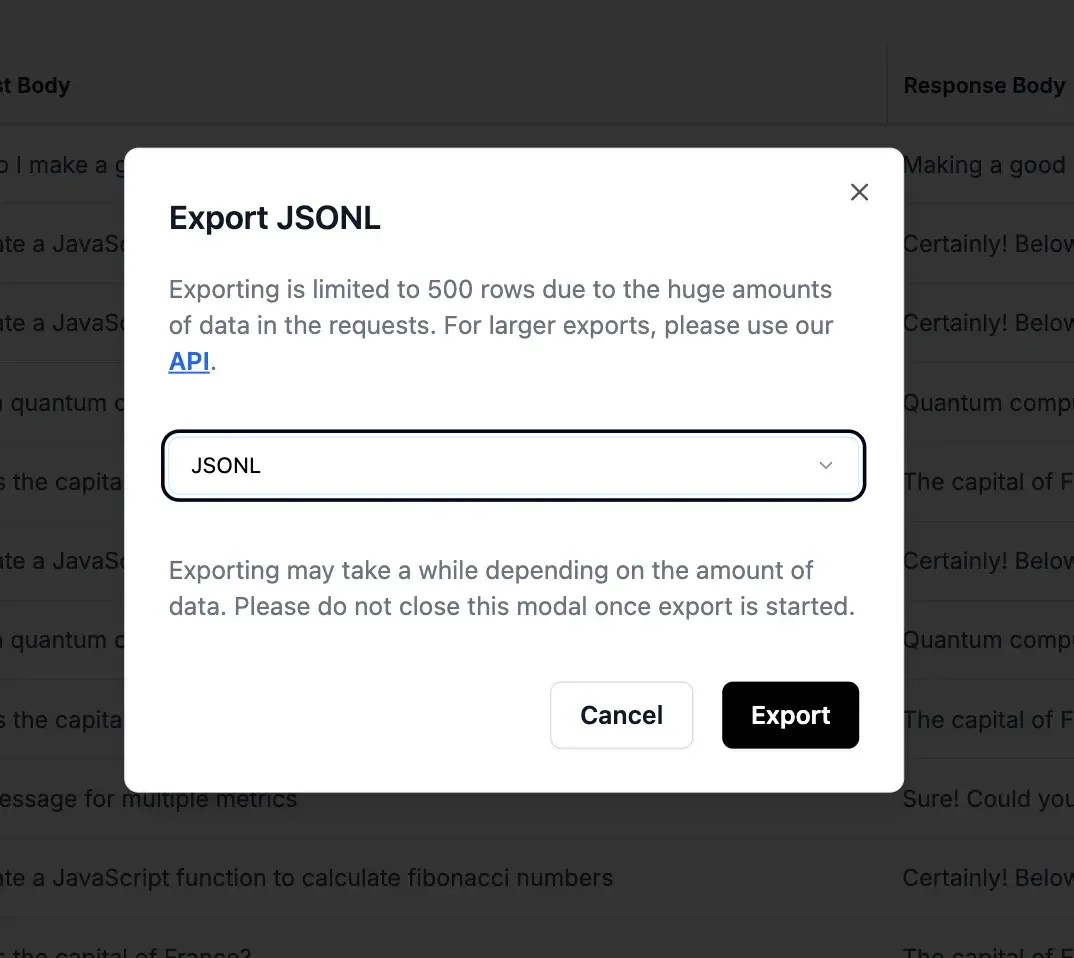
Perfect for OpenAI fine-tuning format:
Ready to use directly with OpenAI's fine-tuning API.
Structured format for spreadsheet analysis:
Import into Excel, Google Sheets, or data analysis tools.
API Export#
Retrieve dataset contents programmatically:
Use Cases#
Replace Expensive Models with Fine-Tuned Alternatives#
The most common use case - using your expensive model logs to train cheaper, faster models:
Log high-quality outputs
Start logging successful requests from o3, Claude 4.1 Sonnet, Gemini 2.5 Pro, or other premium models that represent your ideal outputs
Build task-specific datasets
Create separate datasets for different tasks (e.g., "customer support", "code generation", "data extraction")
Curate for consistency
Review examples to ensure responses follow the same format, style, and quality standards
Fine-tune smaller models
Export JSONL and fine-tune o3-mini, GPT-4o-mini, Gemini 2.5 Flash, or other models that are 10-50x cheaper
Iterate with production data
Continue collecting examples from your fine-tuned model to improve it over time
Task-Specific Evaluation Sets#
Build evaluation datasets to test model performance:
Use these to:
- Compare model versions before deploying
- Test prompt changes against consistent examples
- Identify model weaknesses and blind spots
Continuous Improvement Pipeline#
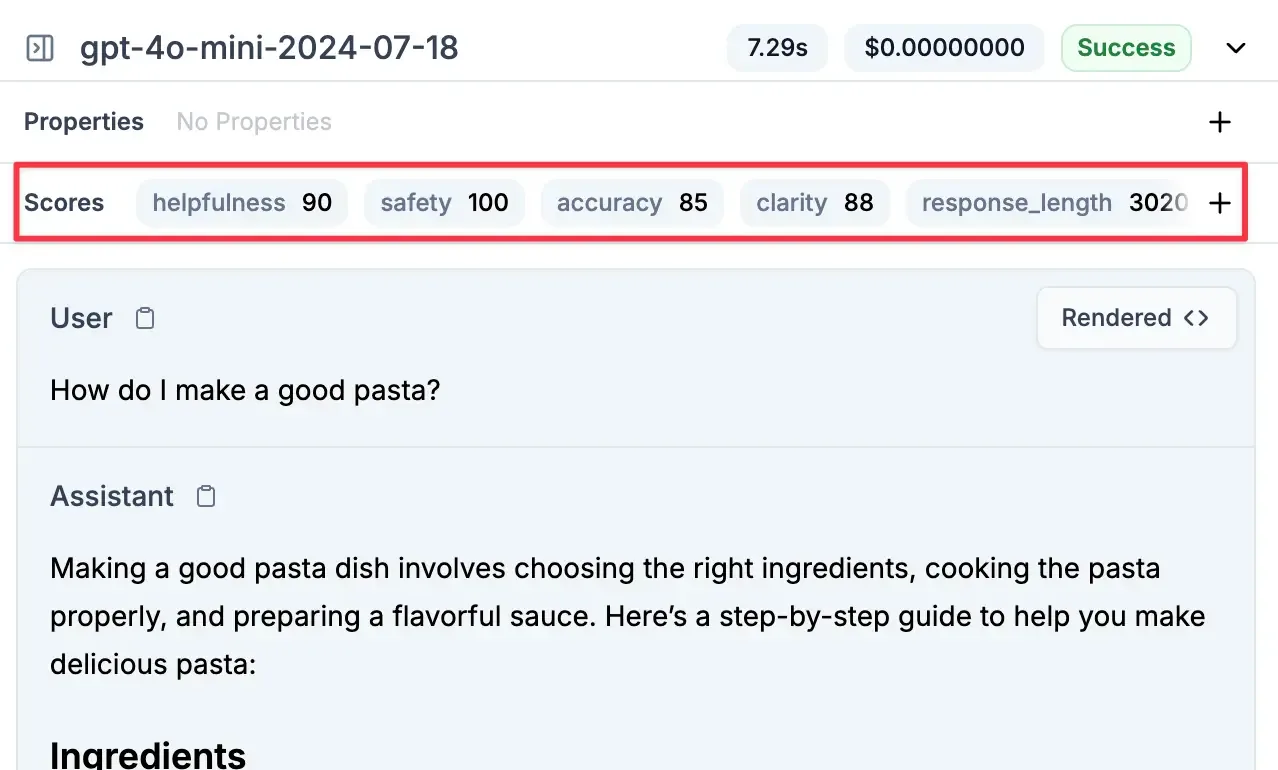
Build a data flywheel for model improvement:
- Tag requests with custom properties for easy filtering
- Score outputs based on user feedback or automated metrics
- Auto-collect winners into datasets when they meet quality thresholds
- Regular retraining with newly curated examples
- A/B test new models against production traffic
Start small - even 50-100 high-quality examples can significantly improve performance on specific tasks. Focus on one narrow use case first rather than trying to fine-tune a general-purpose model.
Best Practices#
Choose fewer, high-quality examples rather than large datasets with mixed quality
Include varied inputs, edge cases, and different user types in your datasets
Continuously add new examples as your application evolves and improves
Document what makes a "good" example for each dataset's specific purpose
Related Features#
Datasets turn your production LLM logs into valuable training and evaluation resources. Start small with a focused use case, then expand as you see the benefits of curated, high-quality data.